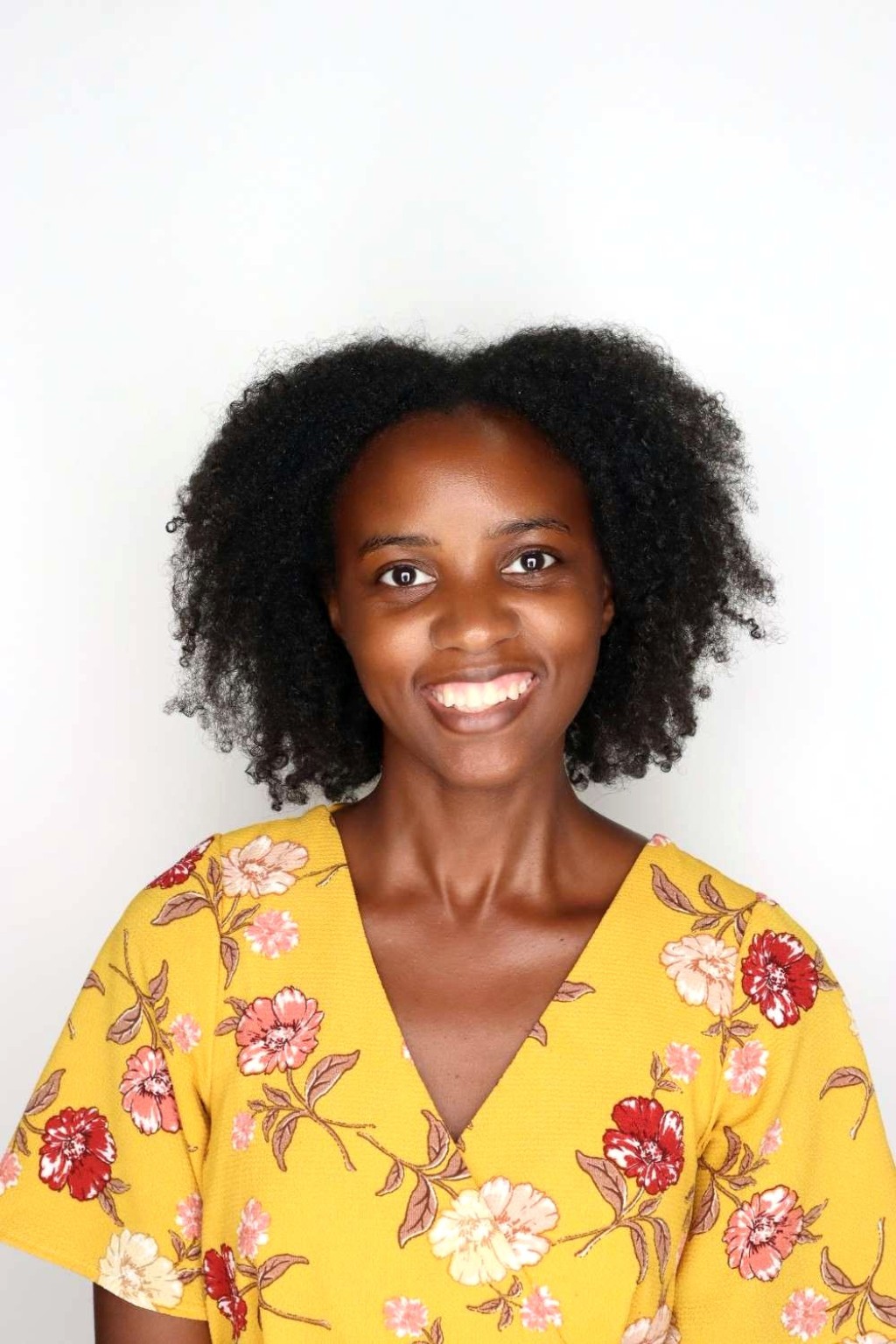
Danielle Procope Bell smiling in a yellow floral blouse

Danielle Procope Bell

Scholar · Author · Teacher
Research, writing & teaching
Assistant Professor of Africana Studies
University of Tennessee, Knoxville

My name is Danielle Procope Bell, and I am an Assistant Professor of Africana Studies at the University of Tennessee, Knoxville. I am also affiliate faculty in English and Women, Gender, and Sexuality Studies. My work is grounded in Black feminist thought, with a particular focus on gender identity, interiority, and the right to care in the lives of Black women.

My research spans the late nineteenth century to the present digital age. I have written on nineteenth-century writer-activists such as Frances E.W. Harper and Nannie Helen Burroughs, contemporary digital spaces, including the Black manosphere and femosphere, and about the lived experiences of autistic Black women. Across these projects, I center their ‘felt lives,’ which describes the sensorial and affective elements of everyday experience, and examine how they intersect with structural constraints.

Black feminismBlack neurodiversity studiesBlack digital cultureAfrican American literature
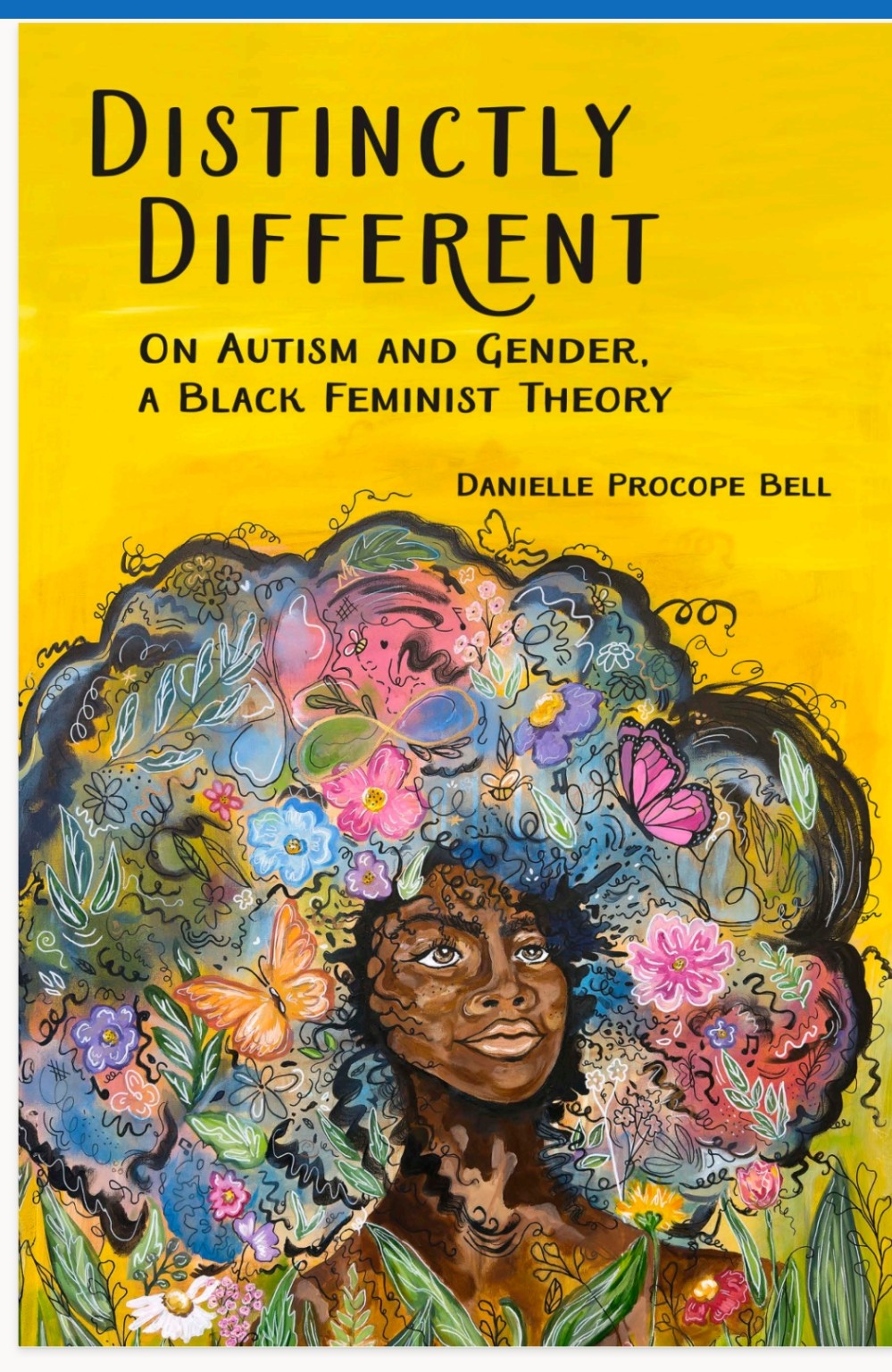
Cover of Distinctly Different
The book

Distinctly Different

On Autism and Gender,
a Black Feminist Theory

How gender can be reimagined through a Black feminist reading of autism.

Named for Toni Morrison’s description of Sula, Distinctly Different brings Black feminist theory and neurodiversity studies together to challenge conventional ideas about autism and gender. Danielle Procope Bell examines neuronormativity—the cultural system enforcing “correct” ways to think, feel, and move through the world—with particular attention to its pernicious consequences for Black women.

Drawing on literature, memoir, media, and lived experience, Procope Bell considers gender when untethered from social performance. She reframes autism as a distinct and meaningful way of being, centering internal felt life over external directives. Thinking alongside figures from Sojourner Truth and Anna Julia Cooper to Megan Thee Stallion and Caster Semenya, Procope Bell establishes autigendering as a methodology for defining gender from within.

Distinctly Different maps what becomes possible when interiority and attunement, rather than conformity, guide understanding of the self. Procope Bell develops a Black feminist reading of autism that refuses to equate well-being with normativity, offering new directions for gender, care, and disability.

Forthcoming in The New Black Studies Series at the University of Illinois Press (2027)

Selected publications
J19: The Journal of
Nineteenth-Century Americanists
“A Delicious Sense of Joy and Love”: On Centering Black Women Readers and Black Domestic Idealism in Frances E.W. Harper’s Iola Leroy
Abstract

The emotional pleasure and joy of late nineteenth-century Black girl and women readers have rarely been considered by scholars of African American literature. Through a close textual analysis of Frances E. W. Harper’s Iola Leroy (1892), I demonstrate the usefulness of centering the interiority of Black girls and women in my reading of the novel’s domestic idealism. That is, I read the novel’s sentimental rhetoric and its romantic marriage plot as working to create and nurture feelings of joy and pleasure for Black girls and women. By imagining Black girls and women as consumers of Harper’s novel, I demonstrate the importance of decentering discourse of both anti-racism and true womanhood when analyzing Iola Leroy. In doing so, I offer unconventional readings of Iola’s near whiteness and the novel’s incorporation of sexual violence, marriage plots, and dual heroines.

European Journal of
Cultural Studies
‘He should’ve killed your ass’: Notes on Black women deserving death in the Black manosphere
Abstract

Netflix’s TV Series Adolescence (2025) has brought to the mainstream the harrowing implications of Andrew Tate’s outsized influence, the manosphere, and ‘incel’ culture and discourse. Adolescence makes visible the often-invisible connection between the manosphere and the murders of girls and women. While Adolescence has enjoyed broad praise, some critics have accused the show of ‘race-swapping’ and ‘anti-white propaganda’ because it features a white boy as the murderer. While this view has been largely debunked, the need to defend Black boys from white supremacist attacks that claim they are inherently prone to violence simultaneously creates challenges for acknowledging violence against Black girls and women. I argue that acknowledging the breadth of the manosphere – and particularly, the existence of the Black manosphere – is important to combat violence against Black girls and women.

Feminist Media Studies“Pick-Me” Black women: tactical patriarchal femininity in the Black manosphere
Abstract

This essay analyzes anti-feminist (“Pick-Me”) Black women content creators on YouTube who exist within the Black manosphere—online spaces populated by Black men who support Black patriarchal dominance. These “Pick-Me” content creators use what I term “tactical patriarchal femininity” to attract the financial provision of an economically stable Black man and to derive income from sympathetic viewers. Tactical patriarchal femininity is an elaborate, all-consuming embodied performance that is as much about emotion work as it is about exuding conventional attractiveness and behavior that is aligned with traditional femininity. Tactical patriarchal femininity exists to combat the matrices of oppression created by capitalism, white supremacy, and institutional patriarchy. Anti-feminist Black women work in reaction to the misogynoirist material realities that victimize Black women. Ultimately, the Black manosphere’s explicit disavowal of Black women’s worth, apart from what they may provide for men in their role as a patriarchalized wife, is dangerous to all Black women—including and especially those Black women who claim anti-feminism.

Journal of Mother Studies(Dis)Allowing Black Mothering: Reflections on the Mammy, the Welfare Queen, and the Long Specter of Black Maternal Health Disparities
Abstract

Existing cultural narratives about Black motherhood impact the wellbeing of Black mothers and their children and directly influence the persistence of Black maternal health disparities. I turn to the “mammy” and “welfare queen” stereotypes because they function to concretize existing views of Black mothers as destructive, lazy, and wasteful when they direct their care and resources towards Black children. I argue that the “mammy” and “welfare queen” stereotypes work in concert with each other to dismiss the Black mother/child bond and this results in what I term the disallowing of Black mothering. I define Black mothering as Black mothers and othermothers taking care of and being emotionally and materially present for their children and able to protect and provide on their behalf. Lastly, I connect the disallowing of Black mothering with the disproportionate rate of Black maternal and infant mortality. I argue that by focusing on addressing racist and sexist cultural narratives about Black mothers, Black maternal health advocates can address one of the root causes of Black maternal health disparities—the perceived unworthiness of Black mothers having and accessing institutional and state resources.

Teaching
Get in touch about teaching →
  • Race, Gender, and Medicine
  • Black Women Writers
  • Black Feminisms
  • Introduction to African American Studies
  • Black Neurodiversity Studies
About

Danielle
Procope Bell

My name is Danielle Procope Bell, and I am an Assistant Professor of Africana Studies at the University of Tennessee, Knoxville. I am also affiliate faculty in English and Women, Gender, and Sexuality Studies. My work is grounded in Black feminist thought, with a particular focus on gender identity, interiority, and the right to care in the lives of Black women.

My research spans the late nineteenth century to the present digital age. I have written on nineteenth-century writer-activists such as Frances E.W. Harper and Nannie Helen Burroughs, contemporary digital spaces, including the Black manosphere and femosphere, and about the lived experiences of autistic Black women. Across these projects, I center their ‘felt lives,’ which describes the sensorial and affective elements of everyday experience, and examine how they intersect with structural constraints.

I regularly teach courses such as Race, Gender, and Medicine, Black Women Writers, Black Feminisms, and Introduction to African American Studies (1865-Present). In my classes, students learn through a mix of primary and secondary documents, literature, and media. I encourage students to develop their own perspectives and to connect course material to their broader intellectual lives.

PhD, English · Vanderbilt University
MA, Comparative Literature · University College London
BA, English and Philosophy · University of the Pacific

University faculty profile ↗

Let’s connect

Continue the conversation.

For research, teaching, and speaking inquiries

dprocopebell@utk.edu ↗